


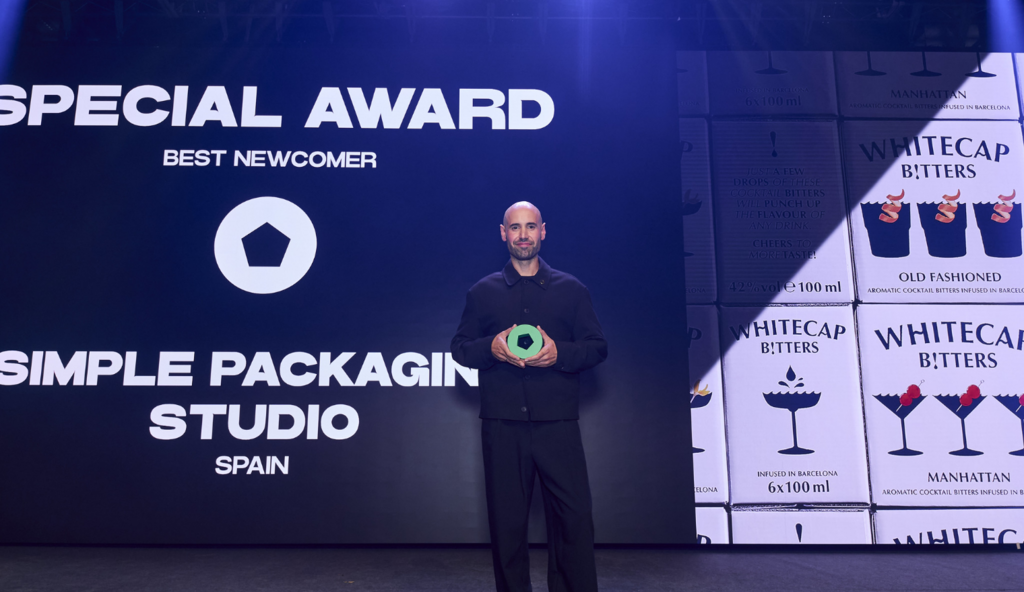
Interview with 2025 Best Newcomer and Food Platinum winner
Following their 2025 Food Platinum and Best Newcomer wins, we speak to Simple Packaging Studio's Creative Director, Gaizka Ruiz, about the vision, craft and strategy behind their success
Following their 2025 Food Platinum and Best Newcomer wins, we speak to Simple Packaging Studio's Creative Director, Gaizka Ruiz, about the vision, craft and strategy behind their success
Can you tell us a bit about yourself and the studio?
Sure! Simple Studio is located in Barcelona, and this year we'll be celebrating our 5th anniversary. I have Basque roots; I was born and raised in Bilbao, but I moved to Barcelona in 2005, drawn by the numerous design schools and studios. After working for more than 15 years in different packaging agencies, mainly on consumer projects and working for big brands like Coca-Cola, Carrefour, Mahou, San Miguel, I was ready for a change and and I launched myself and open the studio.
Simple is a very small studio, which allows me to focus exclusively on packaging projects and oversee the entire process. I believe that finding your own voice is crucial for conveying authenticity, and my passion lies in exploring the personality of brands to tell their story in a visual and creative way.
How did you get involved in design?
Everyone in this profession does it out of passion. In my case, I chose to study fine arts because I was always drawn and was passionate about the art world. This gave me a broader view of the arts and their creative processes: painting, sculpture, photography… I remember being particularly influenced by conceptual art, how the idea behind a work was more important than the technical complexity of the piece itself. The concept carried more weight than the technical skill needed to create a classical painting. I think that's where I shifted into design.
After graduating with a degree in fine arts, I attended a couple of design schools to complete my training, but the specialization in packaging design that we have today did not exist back then. In fact, when I got my first internship at a design studio, my first project was to redesign a line of cosmetic products, and I didn't even know what a die-cut was. From then on, I was hooked on the world of packaging.
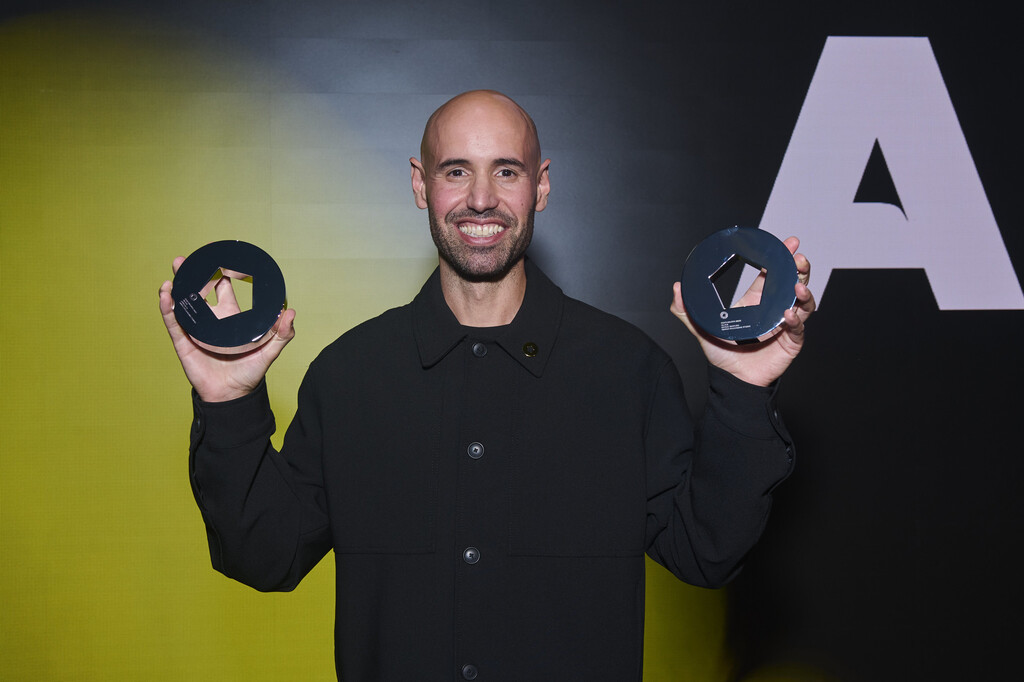
You won the Food Platinum award in the 2025 competition, as well as the Special Award for Best Newcomer. What has it been like to receive this level of recognition?
It was crazy. Seriously. It was my first time at the Pentawards, and I wanted to present different projects to showcase my design vision and the connection between them all. The narrative as a unifying element, even though they were completely different.
For a small studio, this kind of recognition is very important because it's a way to validate what you do and showcase your work internationally.
Looking back, what would you say to creatives or studios considering entering the Pentawards for the first time?
Do it! It was incredible, not only because of the awards, but because of meeting such wonderful people and being surrounded by the professionals you've always admired. Every studio and creative looks forward to the opportunity to showcase their first projects, working on something meaningful that they're proud of and want to share. I remember a book that inspired me when I started out, and I recommend it to every freelancer embarking on their journey: "Show Your Work" by Austin Kleon. There are many memorable quotes, but perhaps the reflection the author makes at the beginning of the book best summarizes our profession — "You don't really find an audience for your work, they find you." — And I believe the Pentawards are the best platform to showcase your work.
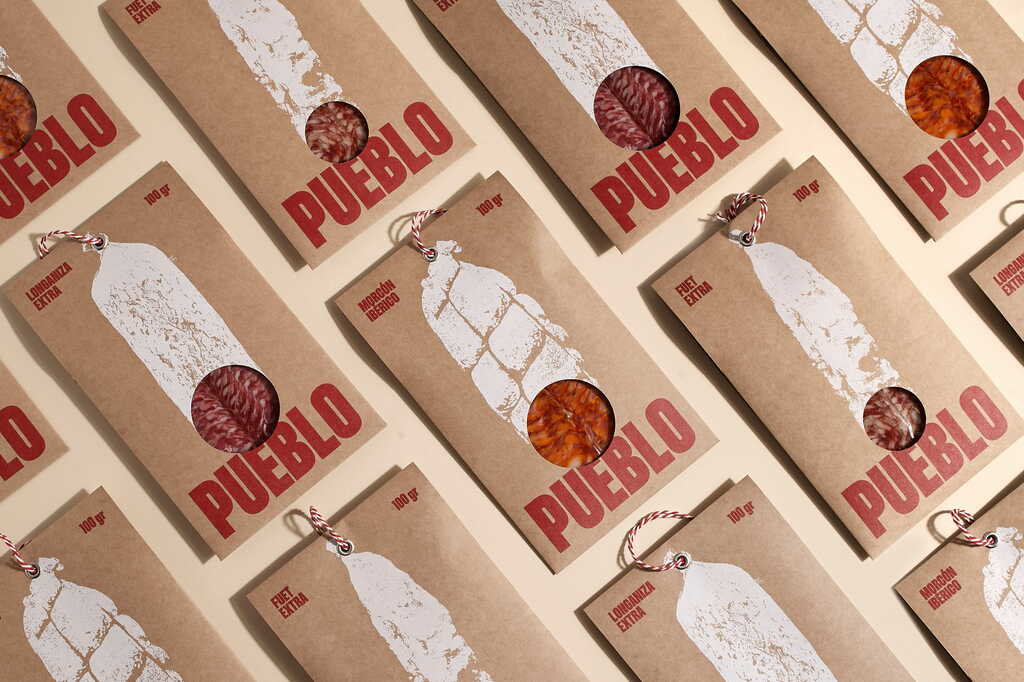
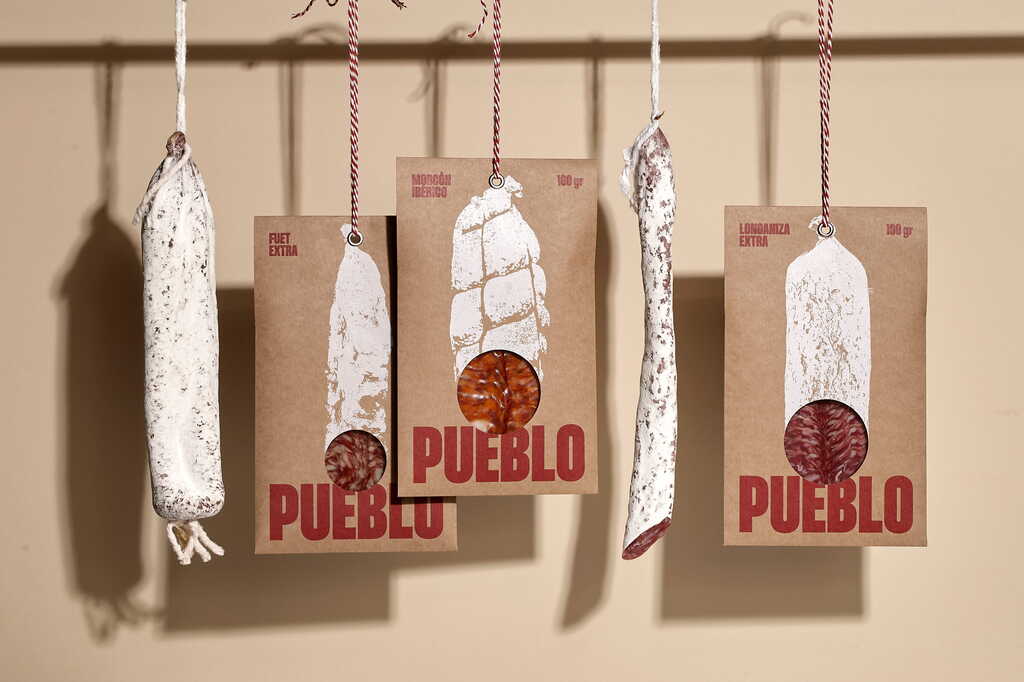
Tell us about your Platinum winning project PUEBLO: the story behind it, inspiration, challenges
The Pueblo project perfectly reflects the studio's philosophy: the complexity of simplicity. I read an interview with Norman Foster in AD a while ago that summed up this concept beautifully — “Simplicity arises from complexity. It's very easy to write an essay, but it's very difficult to write a poem.” — And I think Pueblo is this; it's a poem.
The challenge was to convey the essence of a product as traditional in Spain as cured meats. It's not just food; it's a symbol of Spanish history. And we had to find a way to represent it without resorting to clichés. That's why, when we thought about using the string, not just as a hanging element but as a symbol, we knew we had found the essence of the product: simplicity, craftsmanship, and tradition.
You won five awards in total last year, was there one that felt especially meaningful to you?
All of them. I mean, behind every project there's a personal story. And as you work on each one, you get more and more involved. They're like your children, whom you watch grow. I don't have a favourite; I love them all!
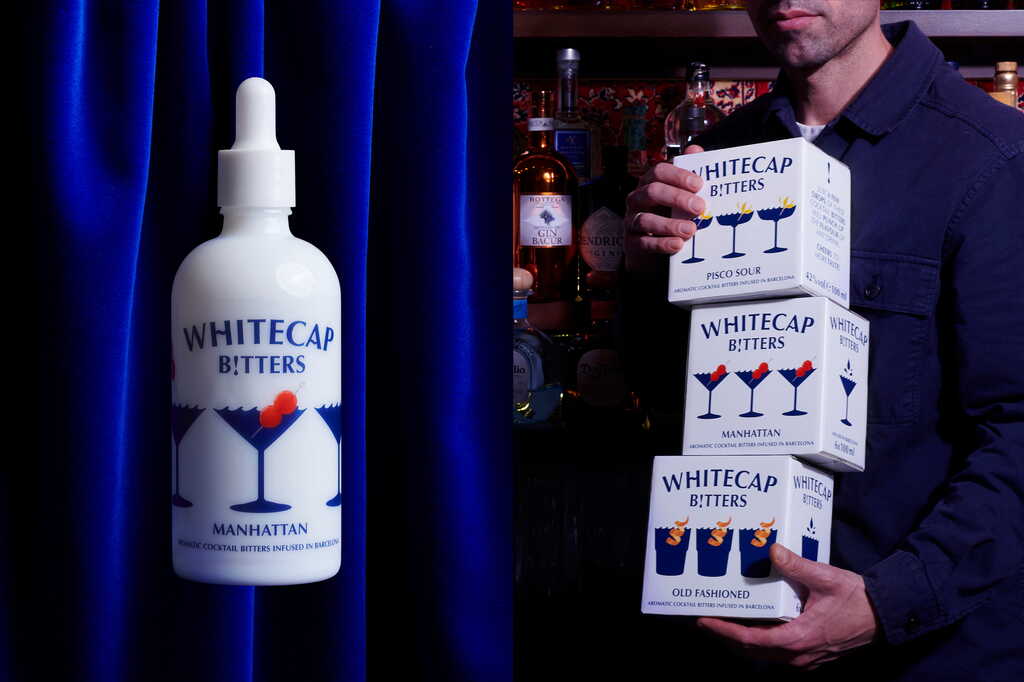
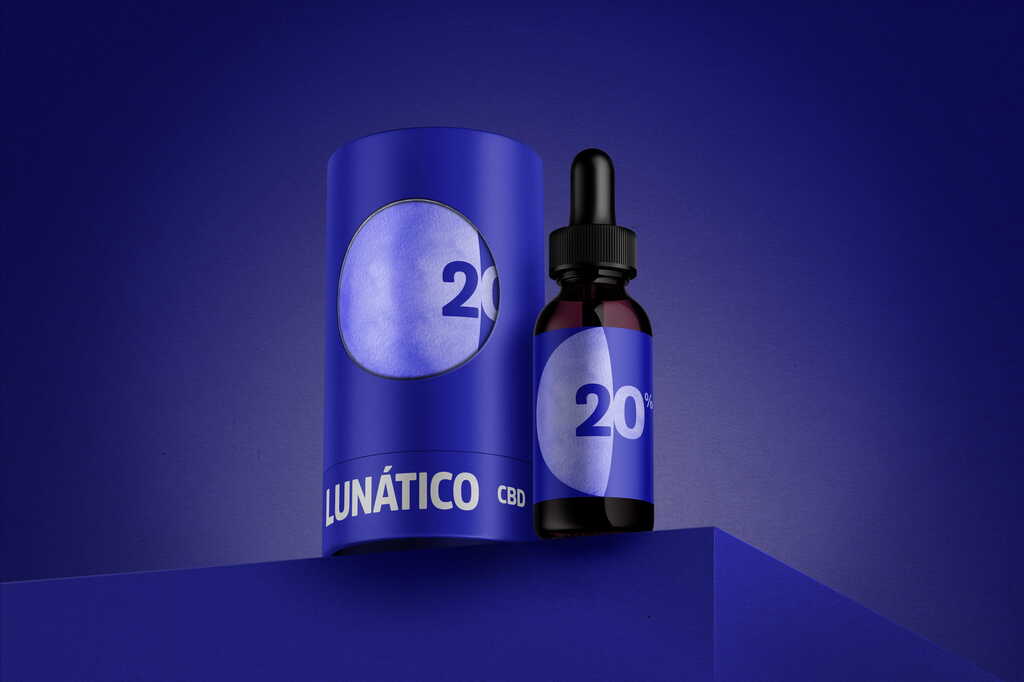
Do you have any exciting projects coming up that you can share with us?
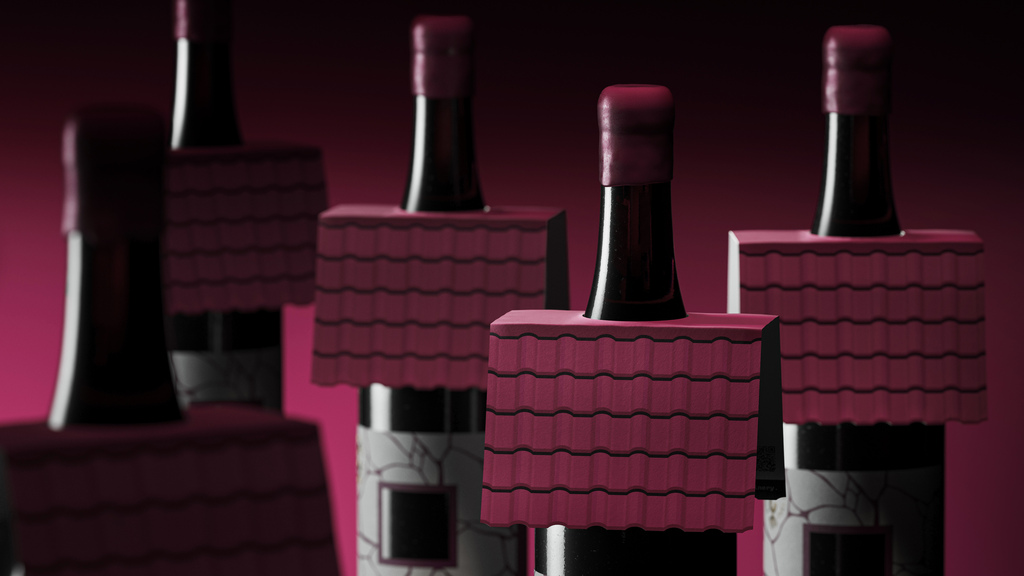
Of course. Right now, I'm in the middle of different exciting projects with the same need: to find a story to tell. But there's one in particular I want to share with you: " Stone House”. This wine speaks of family, roots, and legacy. It's a great example of how design and creativity can help a brand build its personality and tell a profound story. A simple idea, “the first stone house in a small village where the owner made his first wine”, conveys many feelings and values. It symbolizes the enduring legacy passed down from generation to generation, just like the vineyards.
How do you manage to stay creative and find inspiration?
Well, as Picasso said —"Let inspiration find you working" — or something like that. When you're a designer, you're a designer 24/7. You accumulate visual culture throughout your life. Books, exhibitions, films… it all adds up. In the end, our work is rigorous, very methodical. And ultimately, it's about intuition. You know when something works or not.
To you, what is the power of design?
Design is a communication tool. And in my opinion, it's the most powerful tool brands have to connect emotionally with their audience.
What would you say to your younger designer self, or to students wanting to get into the industry?
Tough question! I don't like giving advice. The only thing I'd say is follow your gut, and you won't go wrong.