


Interview with 2025 Platinum Professional Concept Winner, Gentlebrand
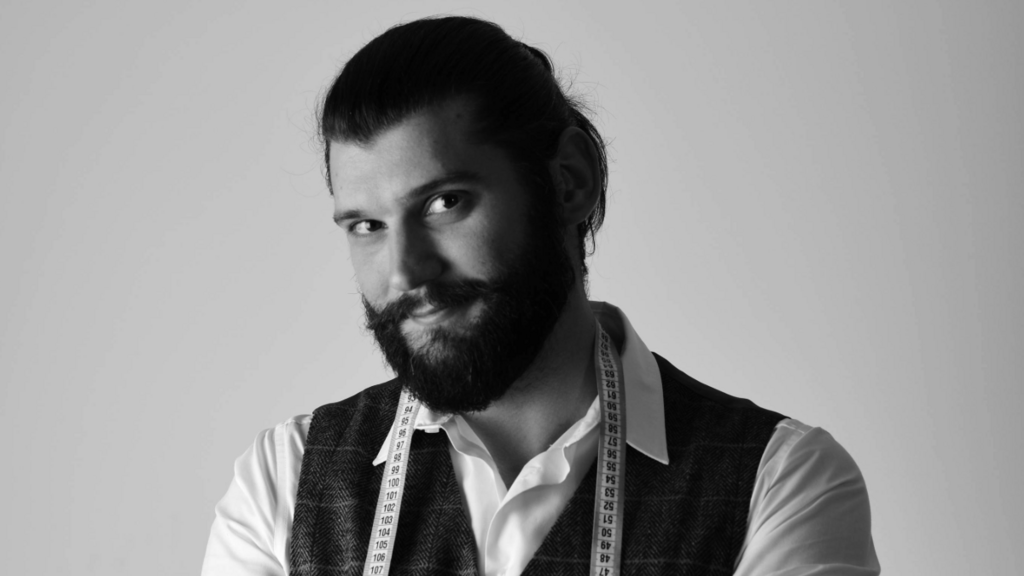
We spoke to Andrea Rizzardi, Managing Director of Gentlebrand about their Professional Concept Platinum win, tips for working on concepts and his favourite work from 20 years of Pentawards
We spoke to Andrea Rizzardi, Managing Director of Gentlebrand about their Professional Concept Platinum win, tips for working on concepts and his favourite work from 20 years of Pentawards
Can you tell us a bit about Gentlebrand- who you are, where you’re based, what brands you work with?
Gentlebrand is an international design agency specializing in brand strategy, brand identity, and packaging design for the FMCG and beverage markets. We work at the intersection of creativity and engineering, helping brands transform packaging into a strategic asset rather than just a container.
We are based in Conegliano close to Venice , Italy, but we operate globally, supporting both established international brands and emerging challengers across categories such as water, soft drinks, wine, spirits, dairy, food and HPC. Since founding the agency, we’ve further strengthened our ability to connect creative vision with industrial reality, offering an end to end approach that goes from strategy to implementation.
What distinguishes Gentlebrand is our integrated methodology : we combine market analysis, brand positioning, storytelling, and design with deep technical and engineering expertise. This allows us to develop packaging that is emotionally engaging, technically feasible, and optimized for production and sustainability.
Over the years, we’ve partnered with a wide range of global and regional brands, helping them innovate, refresh their identity, or help them to reposition in increasingly competitive markets. Whether working on premium wine bottles, sustainable water packaging, or new FMCG concepts, our goal is always the same: to help brands succeed by creating packaging that is relevant, distinctive, and future ready.
At its core, Gentlebrand is about turning Packaging Design & Branding into tangible, high performing design—where creativity, engineering, and business objectives move forward together.
How would you describe your core area of expertise, and how has it evolved over time?
Our expertise today is grounded in making packaging a business lever. We focus on how design decisions—structural, material, and visual—can influence positioning, efficiency, and profitability at the same time.
Over the years, our role has expanded in response to what brands actually need: not isolated design outputs, but solutions that work across marketing, production, and sustainability targets proved by a phase of prototyping, so jumping out from digital to enter in the real World, with solution for aesthetical or technical evaluation. This evolution has pushed us to operate closer to decision making—supporting brands in navigating complexity, reducing risk, and turning constraints into competitive advantages.
In essence, with our services of Brand Strategy, Brand Identity, Packaging design, Prototyping, and Packaging consultancy , we are specialized in helping brands make smarter packaging choices. Choices that perform in the factory, stand out at shelf, and remain relevant in a rapidly changing market.
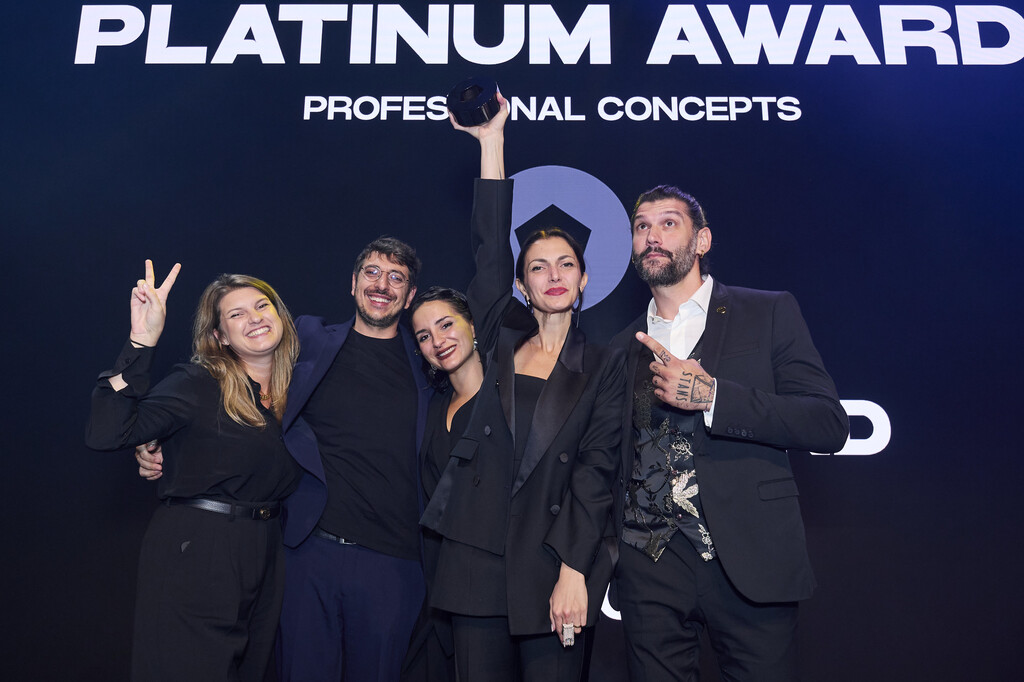
You have won the 2025 Professional Concepts Platinum Award. How does it feel to receive such recognition?
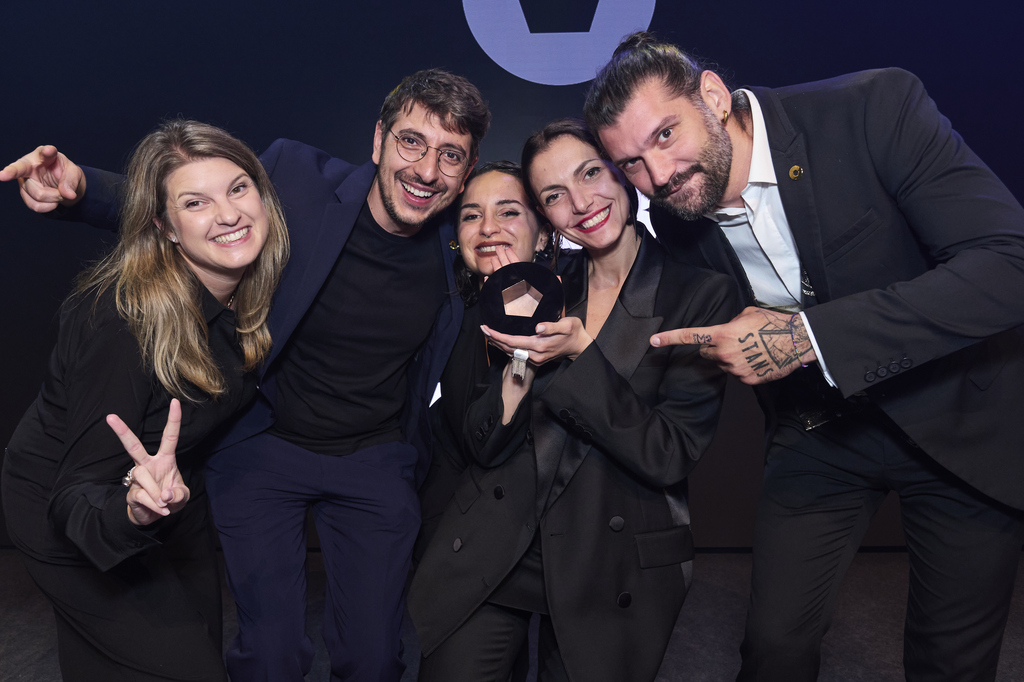
Receiving the 2025 Professional Concepts Platinum Award is, first of all, a strong validation of our approach. It confirms that when creativity, engineering, and strategic thinking work together, the result can be both innovative and relevant for the market.
Beyond the recognition itself, the award has had a very concrete impact. It has helped increase visibility for the project , both internally and externally, giving it credibility when discussing new opportunities with clients and partners. Awards like this create a shared language: they help clients quickly understand the level of thinking, execution, and ambition behind a concept.
From a business perspective, it also a showcase of our capabilities and attention to details. It opens doors to new conversations, especially with brands dealing with all the challenges of the FMCG’s industries combining efficiency (in terms of UX and production) but that at the same time they want to go beyond conventional packaging. In that sense, the award becomes less about celebration and more about ambassador of our approach.
Ultimately, we see this kind of recognition as encouragement, not to repeat what we’ve done, but to keep pushing further, using design as a tool to turn regulatory, sustainability, cost reduction and production efficiency from a challenge into an opportunity.
Tell us about your Platinum winning project, AVANCE - the story behind it, inspiration, challenges…
In categories where “premiumness” must be expressed to the fullest, such as cosmetics and perfume, where every technology and material is used to impress the end user, how can you go even further and offer something truly distinctive?
This was the internal brief of AVANCE. How to break the rules of perfume packaging with something that became more than simple, premium, iconic packaging .
The challenge this time was not in the materials or in the iconic shapes but in transforming the packaging into something more than just an attractive object to collect once, something that can become a key part of your home interiors and a connected component of user experience.
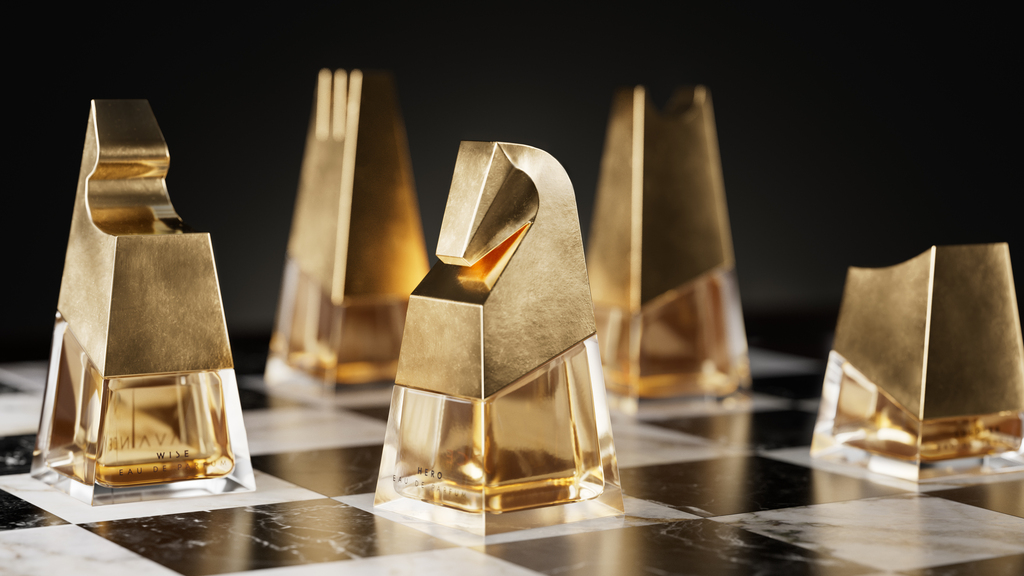
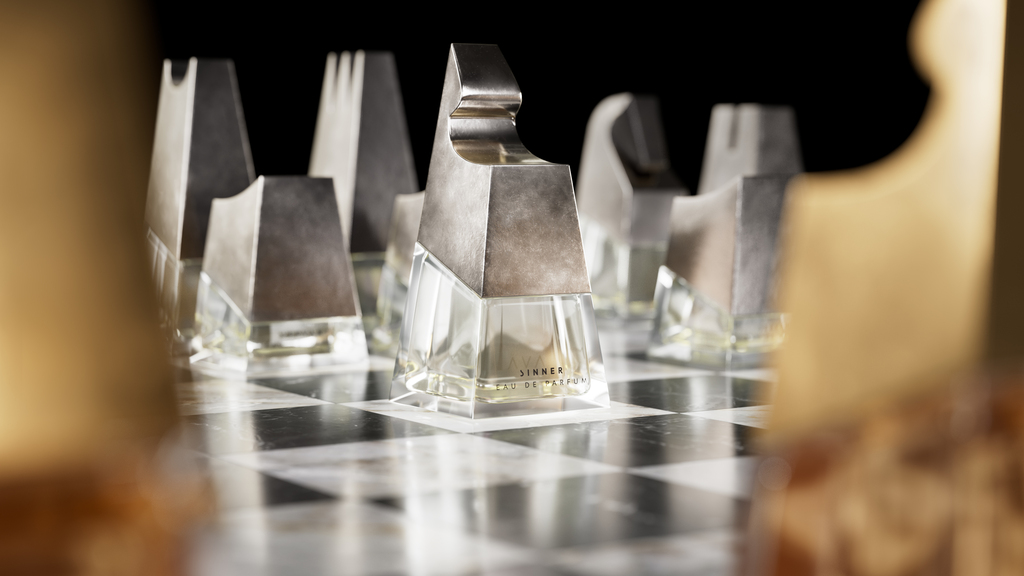
AVANCE is not just perfume packaging, it’s a packaging system that connects branding archetypes to fragrances, keeping coherence as a single unit or as full portfolio of products composing a real premium chessboard. An invite to collect all the fragrances to complete the full system.
What part of the project did you enjoy working on the most?
The part I enjoyed most was definitely the early concept phase , when AVANCE was still an open exploration rather than a defined solution. That was the moment when we could step back from execution and focus on the meaning the project wanted to express.
What made this phase especially rewarding was the brand strategy at the heart of AVANCE . The idea of using the chessboard as a narrative system, where each character represents a distinct personality, allowed us to work at both a strategic and emotional level. Every chess piece became a branding archetype, with its own role, attitude, and values, and each personality was translated into a specific fragrance. It turned into a dialogue between branding codes and product identity, almost a game where strategy meets sensory experience.
What I particularly enjoyed was how this concept ensured coherence between the single product and the entire portfolio . Each unit has its own strong, recognizable character, yet it only fully reveals its meaning when placed alongside the others, just like a chess piece gains significance through its role in the game. This allowed us to design a system where differentiation and consistency coexist, creating a portfolio that feels richer and more strategic than a collection of standalone products.
What would you say to a brand or agency thinking of entering the Pentawards for the first time, particularly with the Conceptual Category?
For anyone entering the Pentawards for the first time—especially in the Conceptual Category —my advice would be to treat the project as a clear point of view , not just as a design exercise.
Concepts are not judged on execution alone. What really matters is the idea behind the idea : the vision, the relevance, and the clarity of thinking. Ask yourself why this concept should exist, what question it is answering, and how it could realistically influence the future of packaging or branding. A strong concept is one that feels visionary, but also credible.
Finally, don’t be afraid to be bold. The Conceptual Category is the right space to explore new models, challenge conventions, and test ideas that may not yet exist on the market. Even if the project isn’t meant for immediate production, it should clearly show how design can open new directions for brands and for the industry.
It’s the Pentawards 20th Anniversary this year, do you have a stand-out moment of design or standout design project that’s stuck with you from the past 20 years?
Gentlebrand started 15 years ago and Pentawards winners that time was my source of inspiration and they are even now pioneers and example of good design in the FMCG’s sector.
One of those is Evian Pure Drop , 2014 Diamond Pentawards Winner, Best in the Show, designed by Grand Angle Design. This for me was the best example of what we call Smartweighting approach, reducing packaging material without compromise performances and premium positioning of the brand.
Another strong memory is Ramloså of Carlsberg , 2011 Diamond Pentawards winner, designed by NINE, where packaging played a key role in redefining premium within the water segment. At the same time is hiding all the technical complexity of designing carbonated products in PET, in which we have strong deformation of the container. This is the best example for me of aesthetics and technical performances integration.
And then there’s Assam Milk Tea of Unipresident, 2016 Gold Pentawards winner, designed by Mousegraphics, whose work represents a completely different but equally impactful dimension of packaging design. Their Pentawards recognized projects demonstrated how visual systems, bold narratives, and unconventional aesthetics can disrupt categories and open new creative languages. It was proof that conceptual strength and iconic graphic can coexist with market relevance.
Can you tell us what you are currently working on? Anything exciting that you can share with us?
I hope you will discover it in the winning projects of 2026 ?
Without spoiling too much:
• New glass-like base for PET container: premium aesthetic of the glass container but with PET bottle to bottle containers;
• New powerful approach to play with colours in PET containers without using colorants but mixing different tonality of recycled PET. This combined with the multilayer injection technology of preform that allow new scenarios of premiumization in plastic packaging;
• A disruptive way to increase the premiumness and decorative possibilities in can packaging simply rethinking the way of utilize colours in the printing phase.
How do you manage to stay creative and find inspiration?
Staying creative, for me, is less about chasing inspiration and more about staying connected to reality . A big part of that comes from talking with customers, listening to their challenges, constraints, and ambitions. Those conversations are often where the most interesting ideas start, because they sit at the intersection of strategy, market pressure, and opportunity.
I find inspiration in understanding what brands are struggling with today and what they’re afraid to confront about tomorrow. Whether it’s uncertainty around costs, sustainability targets, or positioning, these tensions create the starting point for meaningful creativity. When you engage openly with clients, creativity becomes a response to real questions, not an abstract exercise.
Internally, creativity is fuelled by continuous dialogue between disciplines. Designers, engineers, and strategists challenge each other’s assumptions, which keeps ideas fresh and grounded. We also draw inspiration from outside our industry—architecture, fashion, behavioural trends—anything that helps us look at packaging through a wider cultural lens.
For me, curiosity, dialogue, and relevance are the real creative engines.
To you, what is the power of design?
To me, the power of design is in its ability to turn complexity into clarity and intention into experience.
Design has the unique capacity to connect strategy, emotion, and function in a single gesture. It can transform an abstract idea (like values, positioning, or ambition) into something tangible that people can immediately understand, feel, and remember. That’s especially true in packaging, where design becomes the most direct and natural interface between a product/brand and its audience.
Design also has the power to create value beyond aesthetics . When it’s done well, it influences perception, behaviour, and choice. It can elevate a product, make it more desirable, justify a higher value, or guide consumers toward more responsible actions, often without saying a word.
Ultimately, design is powerful because it’s not just about how things look: it’s about how things work, how they are perceived, and what they stand for . When those elements align, design becomes a true strategic tool.
You can find out more about Gentlebrand and their work here .